
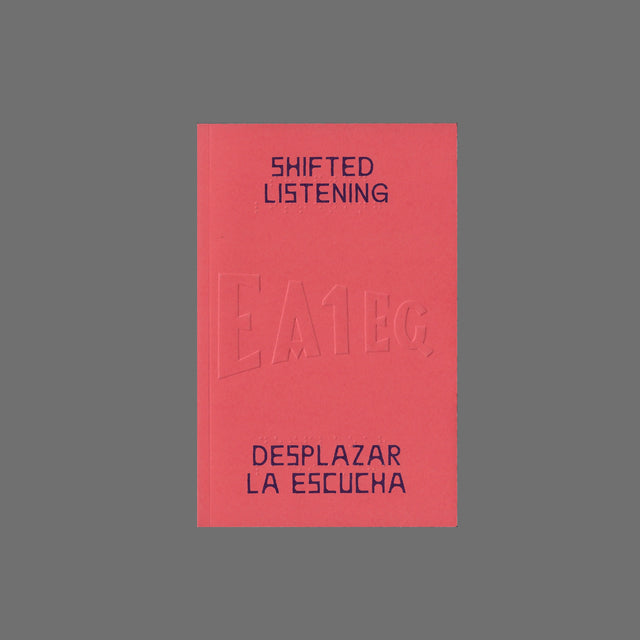

EA1EG: Shifted Listening / Desplazar la escucha
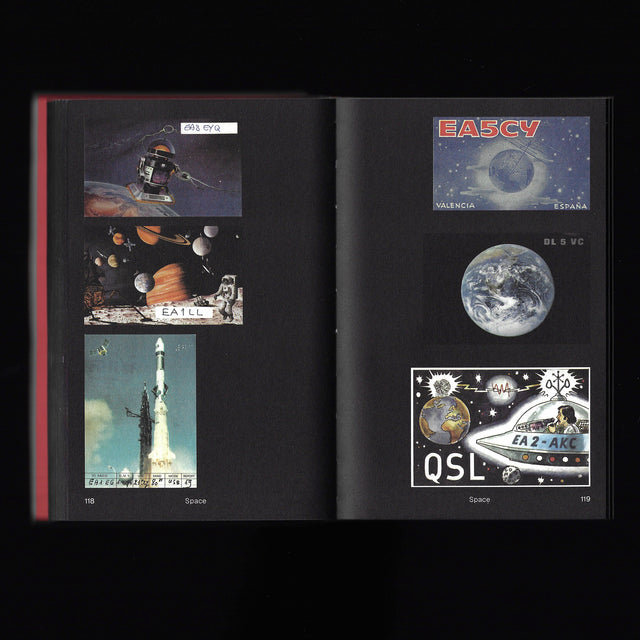
EA1EG: Shifted Listening / Desplazar la escucha studies the archive of Alfredo Abella Martín (1923–1992), a blind radio amateur from Ávila, Spain. Between 1952 and 1991, Abella collected 6,877 QSL cards—printed postcards exchanged by operators to confirm shortwave contacts—received from around the globe. Using the call sign EA1EG, he bypassed the diplomatic isolation of Franco's Spain and later founded ARIES, the Association of Blind Radio Amateurs of Spain. Digitized by his family, the collection was donated to the Provincial Historical Archive of Ávila in 2024.
The book reads these cards as a global atlas of vernacular self-representation and informal diplomacy woven by individuals equipped with transmitters. Operators from Leningrad to Louisiana presented themselves to unseen audiences through mountains, maps, antennas, and Cold War imaginaries of nation, faith, and space. Around the cards, the volume builds a cultural history of amateur radio and a critique of the primacy of vision. It features visual catalogues and interviews with seven experts across media anthropology, sociology, visual arts, science and technology studies, blindness studies, art history, and blind amateur radio practice (including Marc da Costa, Sheila Jasanoff, and Georgina Kleege).
The publication forms part of a broader project that includes the online atlas ea1eg.com and a tactile and sound exhibition opening in September 2026 at the Provincial Historical Archive of Ávila.
EA1EG: Shifted Listening / Desplazar la escucha
meseta books, Berlin 2026
190 x 120 mm, 448 pages, softcover; English, Spanish, German
Authors: Vendedores de Humo (Pablo Santacana López and Marta M. Legido)
ISBN: 978-3-913130-00-2
Book Release: EA1EG: Shifted Listening / Desplazar la escucha
November 4, 19 - 21 hr

